How are you feeling? I’m excited about welcoming in the Spring in full force. I’m re-aligning myself with coming out of Mercury retrograde and into action and abundance for the new season, but I’ve noticed that even though sending funny memes through social media to my loved ones might be my love language, I’m doing it too much.
In this age of constant distraction, the ability to focus has become a superpower.
Whether you’re a student struggling to concentrate on studies, a professional battling information overload, or simply someone who wants to be more present in daily life, improving focus is a universal challenge.
Constant scrolling on social media is training our brains to crave quick dopamine hits in real life. Are we losing the art of deep conversation? Are we forgetting how to improve our wit and humor and now unable to prioritize deep human connection which we know is an essential pillar for longevity?
I know how difficult this is, as a practitioner who teaches her clients to sleep with the phone away from the bed, to limit scrolling time, and to have a strict sleep protocol, I see my loved ones doing exactly the opposite. It’s not easy, and on occasion I do love to listen to a spiritual podcast as a guilty pleasure in the middle of the night when I can’t sleep. However I’m committed to adhering to my wellness pillars to improve my brain function as I’ve seen the longterm damage of not doing so I want to be present and connect deeply in my relationships and want to encourage you to do the same.
I’m calling myself out. No more downward spiraling with social media, let’s focus on getting deep sleep so our brain can cleanse away the toxins created during the day.
The mind also cannot focus without a good night’s sleep. There’s too much science-backed research on this subject; Sleep calls for a separate topic for a newsletter.
I see the rise in teenagers being diagnosed with ADHD and ADD and phone addiction because they choose to stay up late at night scrolling. They are programming their brains for less attention and looking at perfectly curated images that can perpetuate a 'less than' or 'not good enough' feeling.
It’s concerning in this loneliness pandemic where young teenagers no longer have the awkward goofy 12 year old stage and don’t bother learning how to engage in conversation at dinner. They choose instead to multitask with devices whilst watching a movie and opt for selective social engagement.
I know this leads to heightened anxiety and depression because all of my adult clients in their 40’s and 50’s are sending their teenager and young adult children to me.
We have to remind ourselves it only takes a few minutes of concentrated time with self-hypnosis to bring ourselves back to equilibrium and create neuroplasticity which is how we program ourselves to be focused and present.
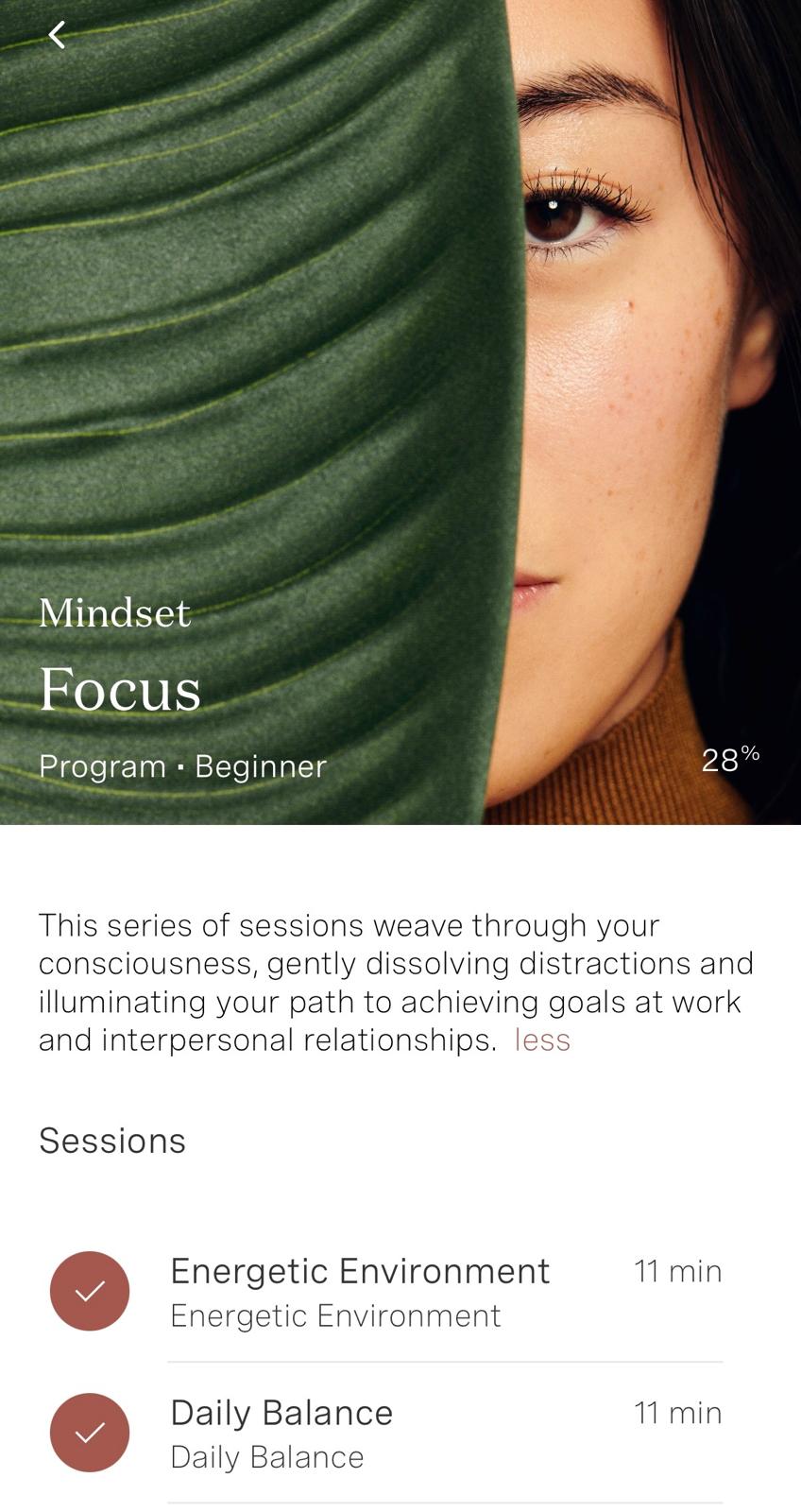
Have you tried the focus program? It’s a 7 day program which I suggest to repeat and train your brain how to focus using self-hypnosis, energy healing, and visualization.
It reminds you that you can train yourself to see, feel and be focused with mental rehearsal. Each session is only 12 minutes so maybe it’s time to re-wire ourselves back to being in the moment before we realize we’ve spent months and then years multitasking and living vicariously through other peoples one-sided biased portrayal and cureated feeds.
.jpeg)
.jpeg)
How it works: The Neuroscience of Enhanced Concentration AND CONNECTION
While productivity apps and time management techniques offer external solutions, hypnosis provides a direct method for enhancing the brain’s intrinsic capacity for sustained attention. The brain needs to be given a chance to rehearse what it’s like to focus with sustained ability for short periods of time in a relaxed state. This is how hypnosis works. We want to give the brain permission to keep this mental rehearsal of focus and attention as a familiar memory. Emerging neuroscientific research reveals that hypnosis doesn’t just help people feel more focused—it actually changes how the brain processes attention at a fundamental level.
Being focused is not a single process but rather a complex system involving multiple brain networks. Neuroscientists distinguish between different types of attention: alerting (maintaining vigilance), orienting (selecting relevant information), and executive control (managing competing demands and inhibiting distractions). All three components must work together for optimal focus, and all three can be enhanced through hypnotic intervention.
Researchers have found that hypnotized participants show reduced activity in the anterior cingulate cortex—a region involved in conflict monitoring—suggesting that hypnosis enabled them to process information more efficiently with less cognitive interference. Remarkably, this enhanced performance wasn’t simply due to increased effort; the brain was actually working smarter, not harder. So yes, you can train your brain to be smarter and more efficient as well as focused.
Further neuroimaging studies have revealed that hypnosis produces distinctive changes in brain connectivity patterns associated with attention.
This enhanced communication allows for better regulation of attention and greater awareness of when focus is wandering.
Hypnosis decreases mind-wandering and self-referential thought—explaining why hypnotized individuals report fewer intrusive, distracting thoughts.
Evidence based Studies
After six sessions of hypnotherapy specifically targeting concentration and focus, participants showed significant improvements on objective measures of sustained attention, with benefits maintained at a three-month follow-up. Perhaps more importantly, students reported greater ease in maintaining focus during studying and improved academic performance. This is the evidence we need for our youth as we want to encourage them to train their minds like professionals.
Performers and athletes are very often taught self-hypnosis techniques by their coaches to enhance their ability to enter “flow states”—periods of optimal performance characterized by complete absorption in the task at hand. Neurofeedback studies confirmed that these individuals developed greater ability to modulate their brain wave patterns, shifting from beta brain wave state (busy, anxious thinking) to an alpha state (relaxed alertness) more readily.
Hypnosis can be refered to as Meditation with goals
In many cultures, focusing on a diety or image of a goddess is also a form of spiritual visualization. I often use the term “try it on” which reminds me of one of my buddhist teachers guiding us in the practice of “treat everyone as if they are your mother/ a female goddess” or “Be the Buddha” or “How would Buddha act?” You can use this visualization for prolonged periods of time, walk around to try on the energy of the kindness or warmth or whatever the deity or ascended master energy reminds you of.
If you 'try on' being a serious professor or neuroscientist and even pretend to be the most focused and smartest person in the world, what does focusing on that feeling for 10 mins every day do to your brain?
What would that be like to embody that energy and keep practicing it?
You know the answer already.
Use your powerful mind to be present and enjoy this precious life.
We don’t get this time back.
I’m enjoying all your feedback on the Manjit app - keep sending it as we build our programs.
I’m sending you much love and healing,
Manjit Devgun
Founder, Manjit app
(Manjit translation = Conquer the mind).

